

Koans for Real Life
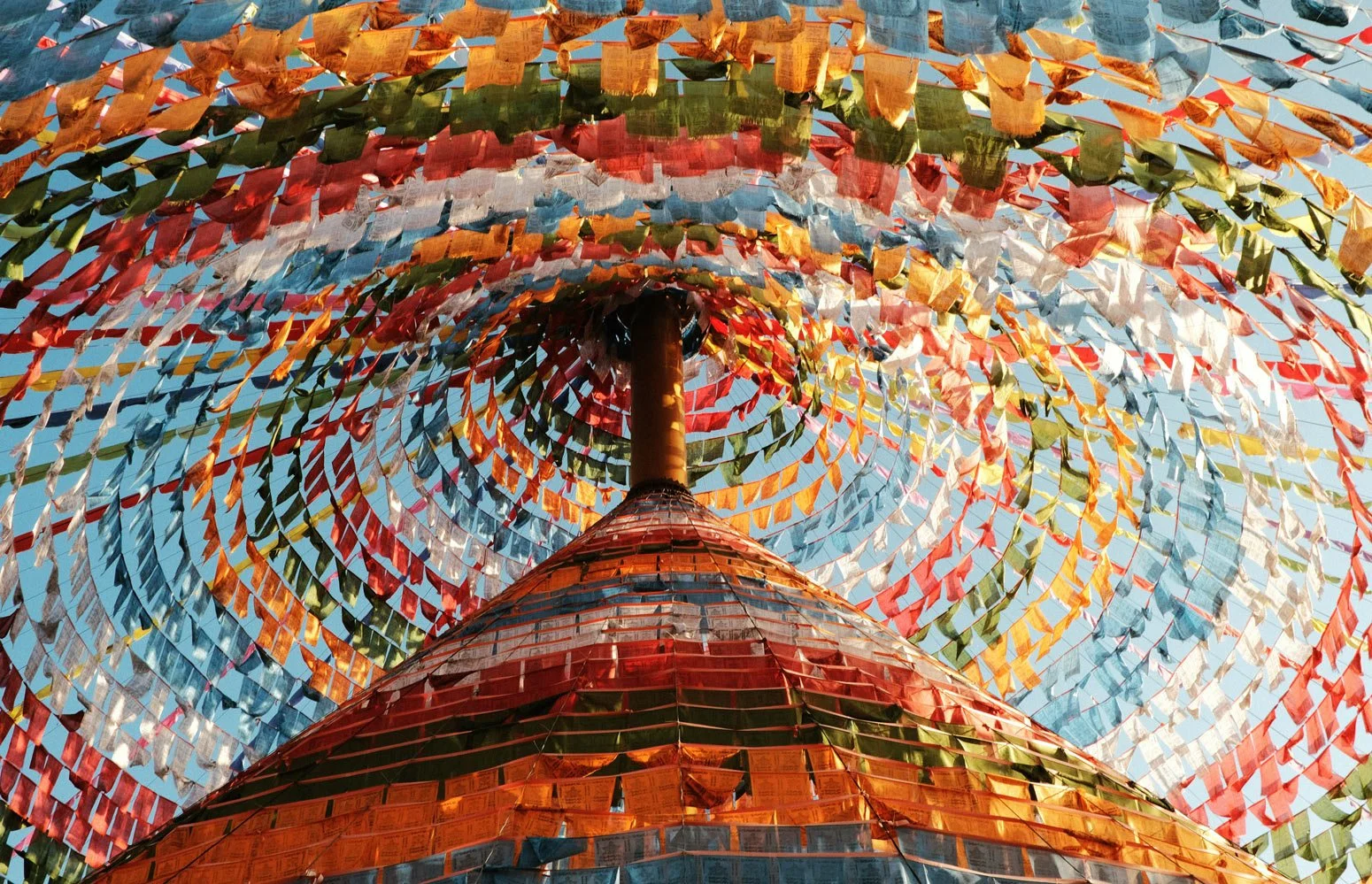
Photo by Aoi
Though koans may stop us with their seemingly irresolvable paradoxes, they are in fact direct expressions of reality, offering us glimpses of our true nature and opening us to manifest what we’ve seen in how we live.
In this talk, Zuisei takes up two koans from The Gateless Gate, Case 29: Neither the Wind Nor the Flag and Case 42: The Young Woman Comes Out of Samadhi. Despite their very different settings and casts of characters, both point to the ways we suffer when we get caught by our categories of right and wrong, higher and lower. When we react from old wounds, we compare, we judge, we resent—in short, we suffer and cause suffering. The way to freedom and peace, Zuisei suggests, lies in throwing ourselves completely into each moment. By responding rather than reacting, we give life to our own lives.
This talk, Koans for Real Life, was given by Zuisei Goddard. Scroll below for video, audio, and transcript.
Transcript
This transcript is based on Zuisei's talk notes and may differ from the final talk.
Koans for Real Life
Good evening. It’s good to be with all of you after having done our fall sesshin, our silent meditation retreat. There is so much that happens during sesshin, it’s like a microcosm of the world, of our daily lives, in which the good, the bad, and the ugly, the wondrous and the unexpected all get mixed up, giving us an opportunity to learn a little more about ourselves. To get a little bit clearer, a little bit freer, a little bit kinder, so that we may leave our world a little bit better than we found it. So that what we create together is, in fact, a buddha field.
The two koans I chose for tonight, Cases 29 and 42 of the Gateless Gate, I’ve always really liked, but they also have some important teachings for us. I’ve been reflecting after sesshin, after spending a bit of dedicated, intensive practice time together, how challenging is what we do, and how necessary.
In the best of circumstances, among like-minded people, sharing a common goal, with everything set up for us so we can truly dedicate ourselves to just practicing, in those ideal causes and conditions, we still find ourselves bumping into one another. We get annoyed, we get impatient, we get angry or frustrated. The mind moves and we see the flag, and it’s the wrong color. Or it wasn’t raised on that flag pole the way it should have, or it gets in the way of us seeing the mountain behind it, and it just… bothers us.
Even in silence, we find reasons to argue with ourselves or with one another. We find fault, we see right and wrong, we see better and worse, higher and lower.
Life is suffering, the Buddha said or, as one of my former teachers pointed out, “Life suffers. When he first said that, I didn’t understand it. “Life suffers,” what do you mean by that? How can life suffer? Exactly like this: “You didn’t,” “I can’t” “He never,” “Why doesn’t she?” “They always.”
Why is it so hard to be at peace? Truly at peace, with ourselves and with each other? Why is it so hard to trust that this is, in fact, what we all want—to be safe, to be happy, to be well? That when I hurt you, what I’m trying to do is to be okay, but I don’t know how, so I do something awkward, something hurtful, and now I have to figure out how to fix that and try again.
Looking Beyond What We Think We Know
Life suffers, because life wants, but life isn’t always clear about what she wants, or isn’t always clear about how to get it. Or, getting it, whether it will actually satisfy. One of my favorite teachings of the Buddha’s is his last teaching in the Mahayana version of the Mahaparinirvana Sutra. It’s called the Eight Awarenesses, and the first two of these are: Have few desires and Know how to be satisfied. And it’s not so much about numbers here: you can have 3 desires but not five, it’s really about knowing what are the right kind of desires to actually make us satisfied. So these two awarenesses go together: have a few of the right kind of desires—and by right we mean those that will give you real satisfaction—and then the second awareness will follow naturally. You will know how to be satisfied; it won’t be hard at all
In this first koan, Case 29: Neither the Wind Nor the Flag, two monks are arguing about a flag. The flag was raised whenever a teacher was giving a dharma talk. In fact, there’s an earlier koan in the collection, case 22, in which Ananda, the Buddha’s cousin and attendant, asks Mahakashyapa what else the Buddha transmitted to him, referring to the koan we took up earlier about the transmission of the dharma.
“When the Buddha raised a flower and you smiled, and he said he was giving you the incomparable dharma, surely there was something else, right? What was it?” In response, Mahakashyapa says to Ananda, “Ananda!” “Yes!” “Take down the flag in front of the temple gate.” In other words, the talk is over, the teaching is over. But what was the teaching? “Ananda!” “Yes,” “The teaching’s over” Mmmh… Here, the flag is waving in the wind, and one monk says it’s the flag that’s moving. The other says, No, no, it’s the wind that’s moving. One person says democrats are correct; they have the country’s wellbeing at heart. Another says no, no, it’s the republicans who are looking after us.
But in terms of the wind and the flag, the wind clearly moves the flag, right, so it’s the wind that’s moving. But you can’t ever see the wind itself, so in effect, it’s the flag that moves—that’s the more accurate argument. Back and forth they go, it’s the wind, it’s the flag. And Master Huineng, whom we met briefly when I quoted the koan on your original face: “Thinking neither good nor evil, what is your original face—the face you had before your parents were born?”
There is no fixed, solid self. The boundary between you and me is much more porous.
Master Huineng has been in hiding. He received transmission from his teacher, Huineng, but he was young, and illiterate, and afraid that the other monks might harm him, Hongren told him to go into hiding and spend some time developing himself. Daido Roshi wouldn’t transmit to a student who was younger than forty. He felt a certain maturity was needed to hold that role, that didn’t have to do just with age, of course, but that did demand a certain level of experience, and you can’t get that except through time. So Huineng, who isn’t even a monk, is maybe traveling and stopping at this monastery, hears the two monks arguing, and he very simply and directly says to them, “It’s neither the wind nor the flag that’s moving. It’s your mind.” And the two monks are “startled,” Guo Gu says. Shibayama Roshi says they are “struck with awe.” Oh, you mean it’s not the wind nor the flag? It’s my mind. Do you mean that when I hear the sound of an ambulance, for example, it’s neither the ambulance that makes the sound, nor my ear, but my mind? Where is the sound? That is a question that some of you doing shikantaza are sitting with or can sit with: where is the sound?
To make things a bit more complicated, Wumen then says, “It’s not the wind nor the flag nor your mind that’s moving.” Well, what is it then? I see a flag moving, so what’s going on? If neither the democrats nor the republicans are right? Then how do you decide how to act? What is true? What can we rely on, if everything is constantly moving and changing?
Wumen is quoting a nun by the name of Miaoxin who, when she heard a group of seventeen monks talking about this story, “It’s the wind, it’s the flag. No, it’s your mind,” said “You seventeen monks have never come across Buddhism even in a dream! What a pity!” A bit taken aback, they ask her for the teachings—to their credit. Instead of getting defensive or dismissive, since she’s a woman, they have the presence of mind to say, “Oh, will you please teach us then?” She says, “It’s neither the wind, nor the flag, nor the mind that’s moving.” And at this, all seventeen of them became enlightened. What did they see? Who’s right? Who’s wrong? Most importantly, how do I act so that life won’t continue suffering?
What these koans do, is the make conscious what’s unconscious. When we interact with one another, mostly our action is unaware. You open your mouth and say something hurtful, and feeling hurt, I respond in kind. In that moment, it’s our wounds that are duking it out between them. It’s our karma, our story that collided full on with your story—which doesn’t make the interaction any less real or any less hurtful. But it does show us that most of the time, we’re on autopilot. We’re not responding out of clarity and concern, we’re reacting out of hurt and self protection.
It may seem that this koan is about the wind and a flag, but it’s really about you, about your heart. It’s about that wound that won’t heal and it won’t heal because it hasn’t been aired out, it hasn’t been exposed and studied. Bacteria thrive in darkness and humidity. Anything that is kept hidden, that is kept tucked out of sight, will fester over time, but bring it out into the sun, into the light. Although it will be painful at first—who wants to be so exposed?—over time, it will heal. We can only address what we can see, so our job is to bring our darkness into the light, uncomfortable as that might be.
Beyond Titles, Status, and Self-Importance
Case 42 is the Young Woman Comes out of Samadhi. I’m going to use young woman instead of girl, out of respect for her and all young women like her. Gentlemen, when referring to a female older than twelve, call her a young woman. “Girl,” in many contexts, will be derogatory, so just err on the side of respect.
In this koan, Shakyamuni Buddha (Guo Gu uses another name for him since it’s a past life, but for the sake of ease, we’ll stick with Shakyamuni; it doesn’t affect the koan either way) travels to the World of Pervading Light where a bunch of buddhas have gathered and Manjushri—we’re not told why—isn’t allowed to join them, and is instead sent away. When he comes back, all the buddhas return to their homes and only one young woman remains, sitting in samadhi next to the Buddha’s seat.
Now, samadhi is a deep state of concentration in which subject and object disappear. The young woman is so absorbed, that she doesn’t notice all the other buddhas, or Manjushri, or her teacher. She’s not concerned with what they’re doing, with their status or their powers. She’s essentially doing her thing. But from Manjushri’s perspective, it does very much matter who she is and where she’s sitting. The seat next to the teacher is the second most important seat, when it comes to seniority. A shuso sits next to the teacher in what becomes a seat of honor—a seat that gives expression to their development and accomplishment. The problems start when they believe that hype, when they take the seat and its placement as real, and the title as real (this is true both for the shuso and the teacher, and for any other practitioner).
At the monastery I had the job of zendo monitor for many years, which meant I was responsible for the well being of the people in the zendo, and to some extent, for the integrity of the practice that took place there. One sesshin, one of the participants had been sitting in their seat back when we arranged people by seniority, and then halfway through the week, they switched to a chair. Because I couldn’t see people behind them, I took their name plaque and moved them to the outer rows, next to the wall, which is what we did with everyone sitting in chairs, so we’d have an unobstructed view of the zendo. But when the end of sesshin came, that person came to me almost in tears, and asked me what was wrong with their practice. At first I didn’t know what they were talking about. What do you mean? You moved me to the back, they said. What did I do wrong?
Oh, no no! Nothing, I said, I just couldn’t see. But for four days, that person thought I somehow knew what was going on in their mind, and had made a judgment about it. Did I mention that life suffers?
In this koan, Manjushri—the bodhisattva of wisdom, by the way, which just goes to show we all have work to do, always, all the way up to perfect enlightenment— he gets upset and asks the Buddha why a mere woman can sit next to the Buddha when he can’t? Why does such and such get to do liturgy or doan or jukai or shuso or, or, or…?
We’re so quick to map ourselves and the world according to categories we’ve set up in our mind, categories we think are real and true and accurate when it comes to describing how things are. Then we stake ourselves on these categories, and wonder why we’re disappointed when they don’t work in our favor. Well, they’re not real. They’re skillful means—provisional skillful means, not just in Zen but in all of life. Vicepresident, CEO, more letters after your name, whatever it is. If anything, with more power comes more responsibility and a greater need for humility.
But Manjushri’s caught—I am Manjushri, the bodhisattva of wisdom. She’s just a woman. Why does she get to sit next to the Buddha and I don’t? And the Buddha says, “You bring her out of meditation and ask her yourself.” But he can’t, like the monk who can’t pick up the Buddha’s robe in the Huineng koan, Manjushri can’t wake her up. And not only that, the Buddha says, “Not even hundreds of thousands of Manjushris would be able to do it.” Why? Because it’s not about power. It’s not about how much you’ve accomplished, how much you know. It has nothing to do with titles and positions. But what is this “it”?
Then the Buddha says, there’s a bodhisattva called Wangming (which means “lacking clarity” or can also be translated as “unenlightenment,” “delusion”). He can wake her up. And in effect, Wangming comes out of the earth, snaps his fingers once, and brings the young woman out of samadhi. Oh!
You can know all the teachings, be able to recite the sutras, respond to the koans and still freeze when it comes to doing what’s needed. That’s why our practice can’t be abstract. That’s why it can’t be just about the hours we spend sitting, or the koans we’ve passed. It has to be alive. And how do we know if it’s alive? We respond instead of react. We see the category taking shape in our mind and we remind ourselves, That’s not what’s needed here. That’s not what will help me be free and at peace.
At the beginning of your day, invoke that most powerful of minds, the mind of awakening, and let it guide you…
It’s not in the titles, these koans tell us. It’s not in right and wrong, first and last, nor even in wisdom and delusion. It’s not in how much I can do, what I have to show, it’s only and always here, in the interaction between me and this moment. That’s the only thing that shows us whether our practice is bearing fruit. And let me set your minds at ease: it’s not in koans or shikantaza, the breath or metta, loving-kindness. Because after a class like this, invariably some people start wondering whether they should be doing koans. It happened after our shikantaza study too. Just do your practice completely. FOMO is another unreality, there’s nothing you’re missing out on, and therefore nothing to be afraid of. Each skillful means will only be skillful if you use it correctly. So how do you use it correctly? Well, don’t worry too much about that part, I’ll make sure that you are. You just worry about doing it completely, sincerely, holding nothing back. When you’re done, set it down and do whatever else your life’s demanding of you. This is how you wake up moment by moment, koan after koan. This is how you give life to your own life.
Explore further
01 : Concetration: The Jhanas with Zuisei Goddard
02 : The World Between Breaths: Mu and Buddha Nature by Zuisei Goddard
03 : Sound of the Bell: The Why Behind Things with Zuisei Goddard
Koans for Real Life, a talk by Zen Buddhist teacher Zuisei Goddard. Video, audio, and transcript available.