

Sacred Food
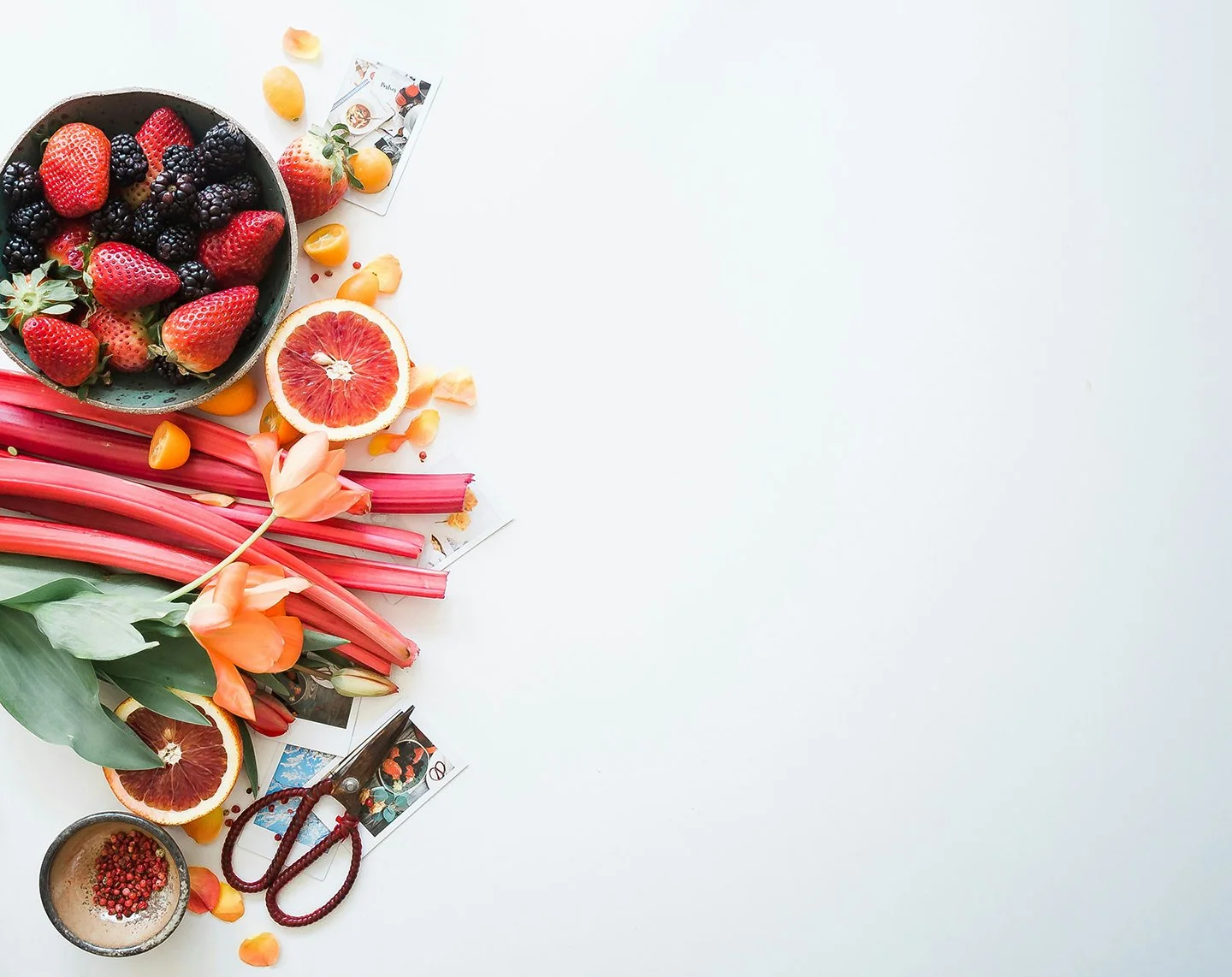
Photo by Brooke Lark
Zuisei and the sangha dive into the many ways and contexts in which we relate to food. Whether in the midst of the art of parenting, the suffering of an eating disorder, dinner parties or dining alone, Zuisei reminds us that in simple ways a meal is another chance to engage this sacred life, for ourselves and each other.
This talk was given by Zuisei Goddard.
Transcript
This transcript is based on Zuisei's talk notes and may differ slightly from the final talk.
Sacred Food
May the merits of these teachings benefit all beings.
May these words help and not harm.
May they clarify and not confuse.
May they self-liberate, leaving no trace of me.
Food Offerings and Early Religious Reflections
Today, I wanted to actually do a discussion, not just to talk. I was reading this article in The New York Times about food really as a sacred vehicle, as a way to connect with the divine, if you will. And they were saying how in Thailand, strawberry Fanta is the offering of choice, and it's what's offered to the spirits. And so there's all these homemade shrines, all over different places in the city. So if you go to a restaurant, if you go to somebody's house, if you go to a laundromat, there'd be these little shrines. And you'll always see a bottle of strawberry Fanta with a straw poking out of it. And that is an offering for the spirits.
And then somebody wrote in the comments to the article that after you offer it, you actually drink it. And to make, to become, in a way, those spirits. And I thought that was very interesting.
It made me think, of course, of the Eucharist, right, in Christianity, and particularly in Catholicism, which is thought to be that you're actually taking in the body of Christ. And I don't remember if I've told the group this story, but I did grow up Catholic in a very unorthodox way. My mother had a very unusual and very personal way of both looking at religion herself and teaching us.
At a certain point, she asked us, my brother and I, what we were learning in Catechism. We came back from school one day, and whatever we said, she was horrified and decided that she was going to teach us herself. And so for about a year, the two of us—the three of us, because my brother was there—would meet to read an illustrated Bible. And she would read, we would take turns reading a lot of the stories, and then we would discuss them.
And I remember my mother was particularly taken with the story of Jesus walking over the water. And I think I did talk about this part. It was Eudito's most sold talk: Jesus Walks on Water. And my mother, you know, whenever she would tell that story, there was something in her voice that I interpreted as her saying, imagine what is possible if this is possible.
Years later—and I know I did tell you this—years later, when I was 13, she said to me, "You know, you can do whatever you want, as long as you think it's right, it's the right thing to do, even if I disagree with you." And she does, she taught me to walk on water, I feel.
After about a year of doing these talks, she told my brother—so my brother was 9 at the time, I was 11—and she said, "Okay, you're ready to do your first communion." But even the priest didn't know that we were doing it. I feel like I have told this story. Have I not? No, we were doing it incognito in a way. I mean, the priest didn't even know it was our first time. So she didn't tell anybody. And in Mexico, it's normally a big deal. You have a party, you wear gloves, you wear the dress, you have a brunch afterward, you have a little pendant. I mean, it's a big deal. I mean, it's a rite of passage.
She didn't tell anybody. She didn't tell our grandparents, who were furious afterward. And she said, "This is between you and God. And so this is what's going to happen. This is what the priest is going to say. This is what you do. And this is what it means."
So we went. We had a weekend house, my brother and I, that we would go to pretty much every weekend, every vacation. And so we're wearing shorts and a T-shirt. I was wearing this leopard-print Gatsby cap that I thought to take off because I thought it wasn't appropriate in church. But we're wearing shorts and a T-shirt. And my brother and I, you know, we're just walking up to the altar like it's, you know, nothing. And the priest says, "The body of Christ." And in Mexico, you don't take it in your hand. You put your mouth forward, and they place it on your tongue, and then you walk away. I said "amen," and I walked away.
How We Relate To Food
And it transformed me. I was 11, and it transformed me. I actually felt, I think, in my innocence or whatever, that I had taken the body of Christ. And something happened. And afterward, a couple of days later, my uncle said, "What happened? You're glowing." And I didn't know what to say. He's like, "I ate Christ?" I mean, what do you say? So I didn't say anything. But it really changed me. And not even because it was Christ specifically, because I didn't actually have a relationship, and there are many aspects of the story that I just don't believe in. It was something about that act of taking—in this case, a wafer—taking symbolically a piece of bread, and it becoming something else. And at 11, I believed it. I believed that that's what had happened, and it transformed me.
I was reading that, and, of course, there is that practice. And in Tanzania, they do also a different ritual in which they write verses of the Koran in a saffron-colored ink on a plate, and then they put a little bit of water in it, and then they give the drink to people who are sick. So they're quite literally drinking the Koran.
Many years later, I was in Brooklyn, in fact, and I had an encounter with somebody on the street that reminded me of the meaning of the word Eucharist in Greek. Eucharistia is Thanksgiving. And so I was thinking of all of this, right? And I was thinking of our relationship with food, and I was thinking how it is so fraught for so many of us in our culture. It is the opposite of sacred. And it goes beyond just the nutriment that it is meant to be, certainly for our body, for our being, for our minds. And it becomes something else, right? It might become comfort, it might become solace, companionship. It might become a buffer, right? When we're overstimulated, or a way to, an upper, when we're feeling depressed in some way. Food is a sign of wealth, it's a sign of privilege. And when you are able to indulge in very expensive meals, as happened so much in New York City.
The woman who wrote the article was talking about how now a form of religion is going out to eat. You go out to a Michelin-ranked restaurant, and how it's become about so many other things.
Of course, in our own tradition, food and the taking of food and the preparing of food is such a… I mean, it is a sacred event. It is a sacred activity. And I want to talk a little bit about that in a moment, but I actually would like to first start by asking you: if you take a moment, if you could describe in a few words what is your own relationship with food, how would you describe that?
Yes, Brian.
So I'll say, I'll just throw out a few things. I don't, I would need some time to really think about my relationship with food. And I can start with simply the fact that I enjoy food. There's not much food that I don't like to eat. So it's been really easy for me to eat in my life. You know, I know that, you know, I feel, so I feel grateful that I don't have sort of the… some people have strong likes and dislikes, some people have allergies or sensitivities. I've been really fortunate not to have, you know, not to have any of that in my life. So I've had an easy relationship with food in that way, although over the past decade or so, I've become much more conscious about what I eat and what I buy, and for lots of different, you know, for a number of different reasons. And from the environmental reasons to compassion for animals and all those things.
And yet I find that, so I very much eat one way when I'm preparing food for myself. And yet I find that the most rewarding thing is being grateful for food that's put in front of me. So when I go somewhere and someone serves food, you know, someone invites, last weekend we went to in-laws' house for dinner. And when people offer food, make food for me, that feels, and to take it graciously, no matter what it is, feels like that sort of, that feels, there's something that feels really right about that aspect of consuming food for me. Those are sort of first thoughts.
Yes, Marjorie.
Well, I think it's my hobby to cook. It's my craft, it's my art form. And that is not a good thing, because then I do it a lot, and I enjoy it. I love sharing it. I do love to have dinner parties. I love to be creative with it. I love leftovers. And as Brian said, I was invited out for dinner, and I had to say to them, "I feel like I'm on vacation. This is a vacation. Just dinner at your house." It was wonderful. But I had been with Thich Nhat Hanh's group a lot, or his practice, so we do silent meal practices. And I've led some silent meal practices where you chew 25 or 30 times, masticate that food before you swallow it. You feel it all over your mouth. It's amazing. You try to feel it as far down as you can in your esophagus. And I think it's sort of like a pretty wide gap, a big gap that you know, I don't do that a lot, but I can do that. And I teach people to do that. And it is remarkable when you look at a raisin, a piece of chocolate, and you smell it, taste it, feel it, put it all over your mouth, and then you put it in, eat it slowly. It's just, you taste it so much more. It's really kind of spectacular. But I don't do it that often. Sometimes I eat standing up. I think I am so far gone in terms of food, because eating standing up, what do you do? Just kind of wolf it down.
So anyhow, food is important. I've been sick, and I've lost five pounds and decided, well, maybe I can eat less, and maybe food isn't that important. So, anyhow. Can I ask, you started off by saying, "Food is my hobby, food is my craft, I love to cook, I love to feed other people." So why do you eat standing up?
Once in a while, I don't know, I'm trying to understand myself, or I'm trying to reflect on myself. Why do I? Why do I gulp it down, and yet I can do 35 chews before I swallow? Why do I do that? Why range of eating? Why do I? I don't know, I'll take that into my next meditation. I'll talk to you about it the next time we meet.
Why do I? In fact, it was during a retreat at the monastery, at home, and we were supposed to do orioki, and I couldn't get over the fact that I was standing up and eating. Maybe it's defiance. It's like not following a rule. I kind of have that behavior pattern of being defiant. So maybe it's the rebellious or defiant, or "I'll be darned," that's built into me, or I mean that I'm allowed to be built into me. That's a good one to notice. I have that. I don't know that if it's… I don't do it by even standing up, but that sense of "I will defy the rule," I think that's a really good one to notice.
Because also, I mean, it's just you at home, right? Or you defying… I don't know, the rules of orioki or something. But some other times I do too when I'm standing up. When I have dinner parties, it's an event and one course, two courses. It can be so different than just gobbling up food. So I go from gobble to relax and enjoy, to counting and masticating my food and trying to follow it down my esophagus. I mean, that's a trip. It's just strange.
And I'm sorry, when do you do that? You do that with your group, with the technology?
We tried it. Well, when we were meeting in person, we would do that. I would pass out a little bag that had a raisin, a little piece of chocolate. It's a wonderful smell, it feel it on your lips, put it in your mouth, roll it around, under your tongue, over your tongue, around your gums. It's a terrific experience of mindfulness. And then you chew, chew, chew, chew, chew, and don't swallow it until they tell you you can swallow it. So it's the slowest eating ever. And so I go from the fastest eating to the slowest eating. So I guess I have a terrific relationship with food. I've got it on all levels. But I don't want it to be that way so much. I wish it wasn't quite so important. Anyhow, it's enough everybody. Thank you.
Mindful Eating
So, let's think about that a little bit more, because the point of bringing this up is not just to share these stories. It’s really to consider how eating, preparing, receiving, and taking in food can be a form of practice. It can be a vehicle for mindfulness, for awareness, and for gratitude.
In Zen, we often talk about oriyoki or mindful eating. When we sit down to eat, even a simple meal, there is an opportunity to be fully present. To feel the weight of the bowl in our hands, to notice the colors, textures, and smells of the food, to acknowledge the work and care that went into preparing it. And when we take each bite, to taste it fully, chew slowly, and recognize the life energy contained within it. This is not just about nutrition—it’s about recognizing interdependence, impermanence, and the sacredness of the ordinary.
In many ways, it mirrors the practice of taking in the Dharma. We don’t just listen passively; we receive, we internalize, we let it transform us. Just as the Eucharist is meant to be a transformative act, so too is eating with full awareness. And I think this is where so many of us miss the point. We eat while distracted, while anxious, while thinking about other things. And in doing so, we miss the richness of what is happening right in front of us.
I also want to touch on another dimension: offering. When food is prepared and offered, it is not just sustenance; it becomes a form of generosity, a way to connect with others, a bridge between self and other. Even if we are alone, preparing a meal mindfully can be a practice of self-offering. There is a sense of reverence in that, a way of acknowledging that nothing is truly separate, that the food we eat has been nurtured by countless conditions.
And this brings me back to the article I mentioned about the strawberry Fanta in Thailand, and the idea of taking the offering and drinking it, becoming one with what is offered. There is a profound symbolism there, which is mirrored in many traditions: by taking in the offering with gratitude, we allow it to transform us. We allow the ordinary to become extraordinary. We allow ourselves to be nourished not only in body but in mind and spirit.
So I would encourage you, the next time you sit down to eat, to consider the meal as an opportunity. To chew fully, to taste fully, to be aware of the textures and the flavors. To acknowledge the work, care, and life that has gone into bringing it to your plate. And if possible, to offer thanks—not just a fleeting thought, but a recognition in your body and heart. To see it as a practice in itself.
Because ultimately, Zen practice is not separate from daily life. It is not only in meditation or sitting on a cushion. It is in every act, no matter how small or ordinary, when performed with attention and awareness. Eating can be a form of meditation, a ritual, and a way to awaken to the interconnection of all things.
I think this is one of the reasons food has such a complicated place in our lives. It can bring joy and nourishment, but also guilt and anxiety. By bringing awareness and gratitude to it, we can begin to shift that relationship, to move from unconscious consumption to mindful engagement, from craving to appreciation.
And that, I think, is the essence of what I wanted to share today. Not a theory, not a set of rules, but an invitation: to notice, to feel, to receive, to transform. To see the ordinary act of eating as an extraordinary opportunity for practice, for connection, and for awakening.
Now, I want to bring this into conversation with your own experiences. I’d like to ask you to reflect on your personal relationship with food. Not just what you eat, but how you engage with it, how it affects your body, mind, and spirit. If you could describe it in a few words, what would you say?
Yes, Brian.
“I don’t, I would need some time to really think about my relationship with food. And I can start with simply the fact that I enjoy food. There’s not much food that I don’t like to eat. So it’s been really easy for me to eat in my life. I know that, I feel, so I feel grateful that I don’t have the kind of strong likes and dislikes, allergies, or sensitivities that some people have. I’ve been really fortunate in that way. Although over the past decade or so, I’ve become much more conscious about what I eat and what I buy, for a number of reasons—from environmental concerns to compassion for animals. Yet I find that the most rewarding thing is being grateful for food that’s put in front of me. When someone offers food, makes food for me, that act itself feels deeply nourishing. To take it graciously, no matter what it is, feels right, and that’s an important aspect of consuming food for me.”
Yes, Marjorie.
“Well, I think it’s my hobby to cook. It’s my craft, my art form. And that’s not always a good thing, because I end up doing it a lot, and I really enjoy it. I love sharing it, I love having dinner parties, being creative with it, and even enjoying leftovers. And as Brian said, being invited to a meal at someone else’s house feels like a vacation. I can just be present, receiving what’s offered. But there’s also the practice. I’ve been with Thich Nhat Hanh’s group and led silent meal practices where you chew each bite 25 or 30 times, feel it throughout your mouth, even down to your esophagus. It’s an incredible exercise in mindfulness. You truly experience the food, the flavor, the texture, the effort that brought it to your plate. It’s remarkable. Yet I don’t always practice it. Sometimes I eat standing up, gulping it down. It’s a contrast, a range of experiences. And I notice this in myself. Why do I sometimes eat quickly and other times so mindfully? I don’t know. Maybe it’s defiance or a habitual behavior. It’s something I reflect on and bring into my meditation practice.”
“Yes,” Brian responds, “that sense of defiance or rebelliousness is good to notice. Even if you’re just at home, it’s part of self-awareness, noticing your habits.”
Marjorie continues, “Yes, exactly. And when I do practice slow mindful eating, it’s transformative. Taking in a raisin or piece of chocolate with full awareness, rolling it in your mouth, savoring it completely before swallowing—it’s extraordinary. Yet I switch from gobbling to fully savoring, and it’s a journey. Food is central to my life on many levels, but I wish it weren’t so important at times.”
Another participant, Brian, shares a related experience: “What you said reminds me of Aitken Roshi, who would eat whatever was offered to him, even meat, not because of preference but to honor the generosity of the person giving it. That taught me gratitude. I once ate pork at a friend’s house, which I normally avoid, and it opened a new appreciation for being present and accepting food offered. Food, for me, became a way to realize I wasn’t bound by the story of my family. Neither of my parents cooked much. Discovering I could cook, I realized I could create something from nothing, share love, and nourish others. Even during the pandemic, cooking nightly, it remained a source of pleasure and meaning.”
Eating can be a form of meditation, a ritual, and a way to awaken to the interconnection of all things.
“And that,” I interject, “points to why even a simple bottle of Fanta can be a sacred offering. Food is never just physical sustenance—it carries history, intention, karma. In Zen, oriyoki reminds us that taking life to sustain life, whether a cow or a cabbage, is an act that requires attention and gratitude. Even a raisin contains the sun, water, earth—all elements. Eating mindfully transforms it into a practice. Forgetting, rushing, or eating unconsciously is when we miss that sacredness. Mindfulness reveals the sacred in the ordinary.”
Alexandra adds, “I’ve had a divisive relationship with food, having struggled with eating disorders. Chanting and mindfulness have cultivated gratitude for all that brings food to my plate. I have diminished taste buds, so I can’t fully taste, but I still practice gratitude for meals offered to me. Food sustains me physically, but mindful presence sustains me spiritually.”
Liz shares, “I’ve also had disordered eating. Pregnancy intensified my relationship with food, highlighting cravings and restrictions. I found liberation in learning to recognize real hunger versus emotional craving, practicing oriyoki to understand how much food I truly need. It was a two-year process, eating mindfully at every meal, learning to distinguish enough, not too much. One day, standing by the bread table, I realized I hadn’t thought about food in that moment. That realization of freedom was the beginning of liberation.”
Others contribute reflections on mindful eating, parenting, and children’s experiences with food, discussing the balance between guiding children, allowing them to make choices, and fostering gratitude. Baby-led weaning, offering choice, and teaching by example emerge as central strategies. There’s recognition of cultural differences in food practice, the significance of shared meals, and the ritualization of daily eating.
We discuss transgenerational influences—how parents’ and grandparents’ cooking shapes perceptions of food, treats, and nourishment. Food becomes a site for transmitting values, mindfulness, and cultural practices. Sitting together, turning off distractions, focusing on the meal, creates sacredness in ordinary moments.
Finally, I reflect: our daily acts, even mundane ones, can carry sacredness if we bring attention, presence, and gratitude. Eating mindfully, honoring food, sharing meals, and blessing the act itself are ways to sanctify everyday life. The rituals of oriyoki or family meals point us toward a deeper awareness of interconnection and gratitude. And that awareness can transform the ordinary into a spiritual practice, reminding us that we are capable of bringing blessing into the world through simple, mindful attention.
Sacred Food, a dharma talk by Zen Buddhist teacher Zuisei Goddard. Audio podcast, video, and transcript available.
Explore further
01 : How to Eat an Apple by Thich Nhat Hanh and Lilian Cheung
02 : Knowing How To Be Satisfied with Vanessa Zuisei Goddard
03 : Mindful Eating by Jan Chozen Bays